
In the film now Module 1The business before the pond
Catfish sells. Dead fish don’t.
People are already buying more catfish than local farms can supply. The farmers who profit from that are the ones whose fish survive to harvest, whose costs leave a margin, and who have buyers waiting. This course teaches you to be one of them, step by step, from building the pond to selling smoked fish.
$25One payment. Four modules. Yours for life.
Why most catfish farms fail
Four things sink a catfish farm. None of them is bad luck.
The demand is there and the margins can be good. Farms still close, and almost always for one of these reasons.
-
The fish die.
Stressed fingerlings, poisoned water, low oxygen, disease, cannibalism. Each one is preventable when you know what to look for and what to do first.
Fixed in modules 2 and 3 -
The costs eat the margin.
Wasted feed, the wrong stocking density, no idea what each fish costs to raise. You can grow big, healthy fish and still lose money.
Fixed in modules 1 and 2 -
Nobody is waiting to buy.
Mature fish keep eating. Every week without a buyer is another week of feed coming out of your profit.
Fixed in module 4 -
It’s run like a side project.
No numbers, no records, no plan for selling. Catfish pays people who treat it as a business from the first day.
Fixed in modules 1 and 4
This course is built around those four. Every lesson is there to stop one of them happening to you.
What you’ll learn
Four modules. Empty pond to paying customer.
The modules follow a catfish cycle in the order you’ll live it, and so does the film. Press “Watch this stage” on any module to jump the film to it.
Module 1
The business before the pond
Know whether catfish is right for you, which model to start with, and what every fish will cost you, before you spend a cedi.
- Why catfish, and why in Africa: the supply gap, the margins, a model you can predict, and how little space it needs
- What it really takes to succeed, and the reasons most people fail
- The two business models, the case for each, and the one to start with as a beginner
- Pond options compared, with the pros and cons of each
- The equipment you need and why: aerators, piping, scales and protective netting
- Stocking density, feed conversion ratio (FCR) and sorting, made simple
- Costs, profit and breakeven worked through on a real pond, then on your own prices
Module 2
Stocking and feeding without losses
Get your fingerlings into the pond alive, settle them in, and feed them for growth instead of waste.
- Before stocking: sanitising the pond, and leaving water in the sun for days to clear chlorine and ammonia
- Transporting fingerlings without stress or deaths
- Acclimatisation, step by step
- The first 12 hours: why you don’t feed, checking the pond for leaks, and watching the fish settle
- The right feed and nutrition for each stage of growth
- When to feed, how much, and what getting either wrong does to your fish and your costs
Module 3
Water and mortality control
Water is where fish die quietly. Learn to read it, treat it and keep the oxygen up, and to catch disease before it spreads.
- Controlling chlorine and ammonia
- How often to change water, and how to condition and treat it
- Cleaning and fumigating ponds
- Bacterial infections: the signs, how to manage them and how to treat them
- Ammonia, nitrate, hydrogen sulphide and sludge build-up
- Dissolved oxygen and aeration
- Cannibalism, handling and stress
Module 4
Value addition and selling
Have buyers lined up before harvest, and earn more from every fish by smoking it yourself.
- The marketing mindset that works in Africa
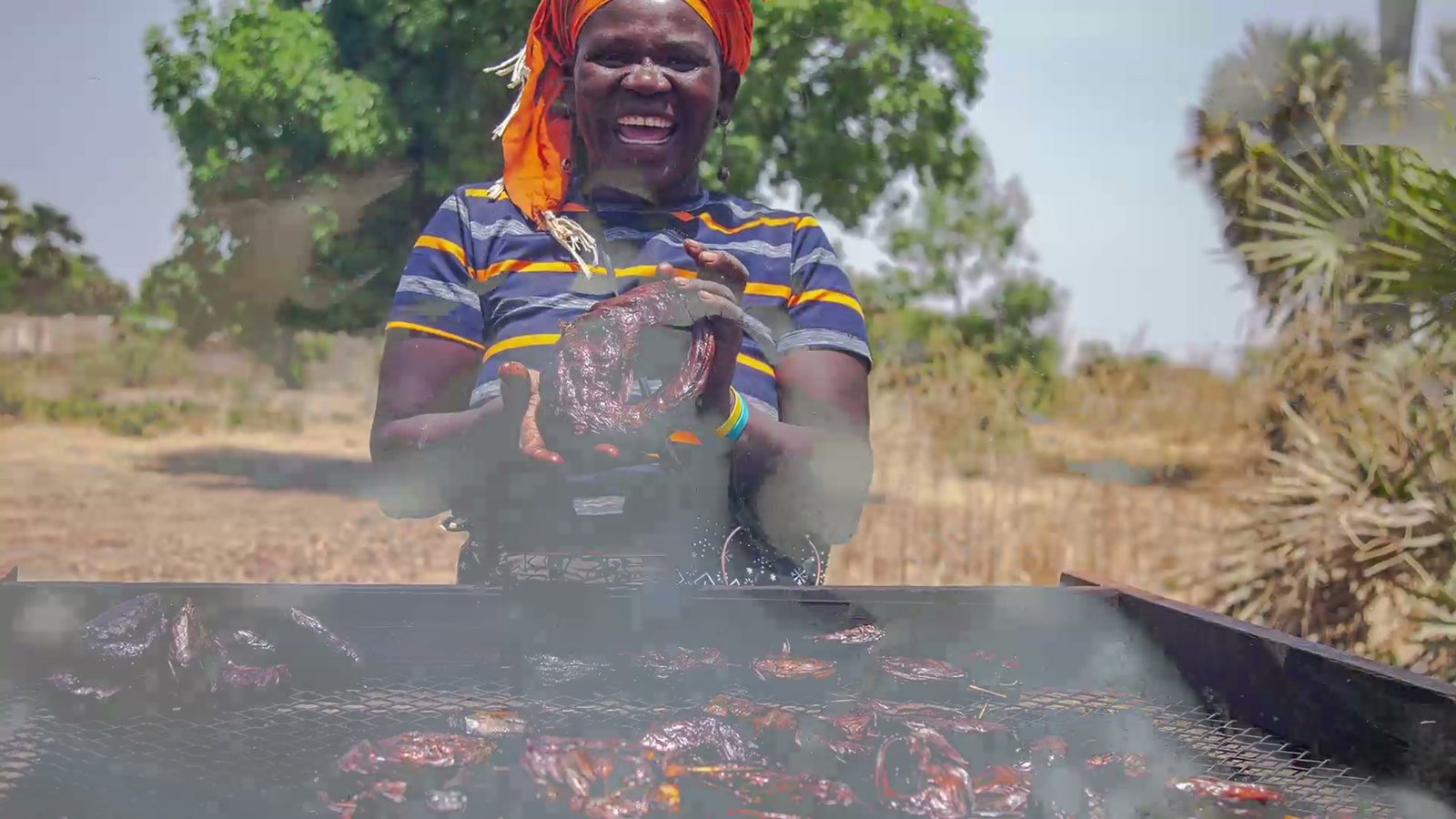
- Healthy smoking, step by step: killing, gutting, brining and cleaning, folding and smoking
- Building a chorkor smoker that smokes fish without harmful smoke
- Drying to the right moisture for shelf life, and packaging
- Selling direct to markets, restaurants and food vendors: how to pitch them, and how to record and fulfil their orders
- Facebook ads aimed at buyers near you, set up step by step: how people in Africa buy online, ads that speak to the buyer’s problem, and a worked example campaign
What you get
The whole cycle on video, and someone to ask.
-
Four modules of video lessons, yours to keepWatch at your own pace, then rewatch each lesson when your farm reaches that stage.
-
Your own numbers, worked outCosts, profit and breakeven on a real pond first, then on what fingerlings, feed and equipment cost you.
-
Questions straight to ClementAsk from any lesson in your study room. Answers come back to your dashboard.
-
Exercises on your own farmApply each module to your site, your budget and your ponds, and get feedback.
-
Notes and progressSave notes against the exact moment in a lesson, and see what’s done and what’s next.
Is it for you?
Made for three kinds of people.
You haven’t started yet, and want to get it right first time.
You want a plan and real numbers before you put money into ponds, fingerlings, feed and labour.
You’ve started, and something isn’t working.
Fish dying, slow growth, feed bills that keep climbing, or fish you can’t sell at a fair price. You want to find the cause and fix it for the next cycle.
You have money to invest, and want a business, not a hobby.
You want to know what a catfish farm costs to run, what it can return, and how to sell what it produces before you commit.
After the course
Want someone beside you on the farm?
Some farms need more than a course: a plan built around your site and your money, and a mentor who stays with you for the cycle. One-to-one mentorship is the next step for farmers who want that. The scope and price are agreed in writing before you start.
Ask for farm visits or references from past clients when you talk to us.
- StartFor new investorsA full site review, a budget for every major cost, and a stocking and feeding plan for a profitable first cycle.
- FixFor farms losing moneyFind the root cause in your water, stocking, feed or mortality, then a clear corrective plan for the next 30 to 90 days.
- ScaleFor farms ready to growCapacity planning from your real water, feed, labour and cash, and a harvest calendar and buyer plan before you add ponds.
Your teacher
Taught by Clement K. Akornor.
Clement founded The Farm Innovator to help farmers and investors across Africa treat farming as a business: find the right idea, model the numbers, build the systems and sell at a margin. His lessons come from real farms, real costs and real markets. Watch his free lessons first, and you’ll know how he teaches before you pay anything.
Questions
Before you buy.
When does the course open?
Soon. Message us on WhatsApp with “Tell me when it opens” and we’ll send you the link the day it goes live.
Will I make $5,000 a month?
That’s the business the course shows you how to build, not a promise. What you earn depends on how many ponds you run, what you pay for fingerlings and feed, and the price you sell at. Module 1 shows you how to work out what your own ponds can earn before you start.
Is $25 the full price?
Yes. One payment gives you all four modules, every lesson added later, the study room and the exercises. One-to-one mentorship is separate and optional.
Do I need a farm or land before I start?
No. Module 1 starts before you build anything, and compares pond options for different spaces and budgets. Catfish needs less space than most farm businesses. If you already have ponds, the course helps you find what isn’t working.
I already farm catfish. Is this too basic for me?
Modules 3 and 4 go deep: water chemistry, bacterial infections, dissolved oxygen, cannibalism, healthy smoking, selling direct and running Facebook ads for local buyers. Most farmers who are losing fish or struggling to sell will find the cause there.
How do I pay?
Checkout runs on Paystack, so you can pay with mobile money (MTN, Telecel, AirtelTigo) or a debit or credit card. Your study room opens as soon as the payment is confirmed.
Can I ask questions while I learn?
Yes. The course has a study room where you can send Clement a question from any lesson. Answers come back to your dashboard.
Make your first cycle the one that pays.
Learn the whole cycle for $25. Then spend on ponds, fingerlings and feed knowing exactly what each decision will cost you, and who will buy your fish.